Story 2 of 6
Simone
Kansas City, Missouri · Protect · Duty of Care
For three years, the city quietly kept note of where she went and on what days. Her agent was how she made it stop.
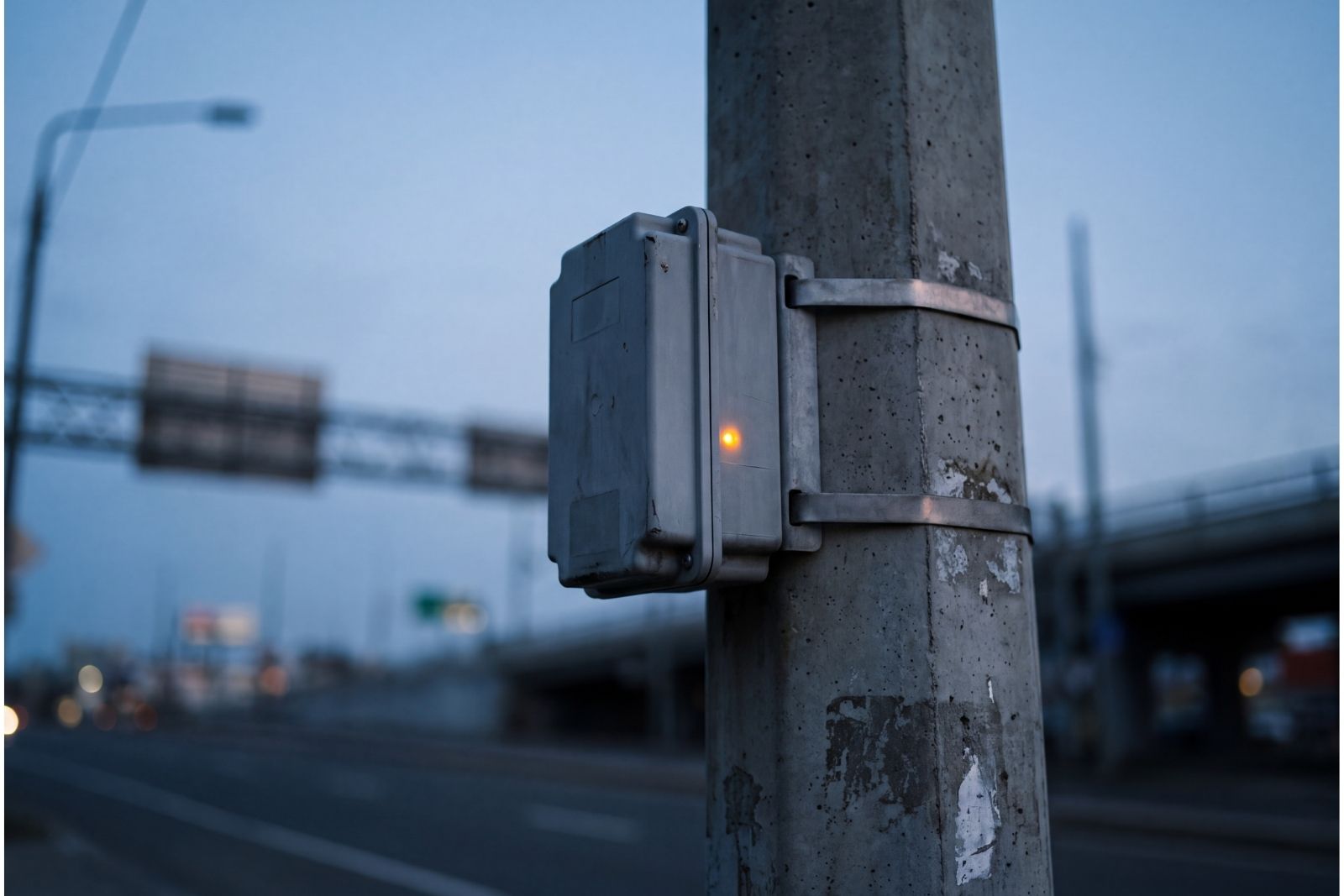
Simone had lived downtown for three years before she understood that the city was reading her.
She is thirty-one, a dialysis technician at a hospital eight blocks from her apartment, and twice a day she walks those blocks through what the city proudly calls its innovation corridor. She liked that when she moved in — the sense of somewhere modern and sensored and efficient, the streetcar that knows when it is full, the lights that time themselves to the traffic.
What she had not thought about, because a person is not built to think about it, was that all of it was also a thousand small eyes, and that the eyes kept what they saw.
She found out the way most people would: something did not add up. Her renters' insurance quote came back higher than her coworker's, who lives in the same building on the same floor. A store she had never shopped seemed to know to show her the more expensive version of a thing. A background-screening flag she could not account for surfaced when she applied for a weekend job.
None of it was a catastrophe. All of it was a low, persistent friction — the feeling of a thumb on a scale she could not see.
She had not known she had lost it until she had it back.
Her agent was the thing that let her see it.
She had set it up for other reasons. One evening she asked it, half rhetorically, why the insurance number was what it was. And it did something no company had ever offered to do: it traced the number back.
It showed her the profile. There was a pattern of life assembled out of her ordinary days — where she went, when, how long she lingered, which doors she entered. Street sensors. Retail beacons. A garage camera. A building-entry system. All of it aggregated by a data broker she had never heard of, sold, and folded quietly into the models that were pricing her life.
What the agent did next mattered more than it sounds. It enforced her terms.
Where she had a right to refuse capture, it refused on her behalf — presenting her own terms of service to the networks the way a lawyer presents a card. It blocked the beacons that had no business knowing her. It opted her out of the broker's collection where the law allowed. It challenged the flag that had been built on movement data she had never agreed to sell.
It could not make her invisible. Some of the eyes are lawful, and some of the capture is the price of walking down a public street. But it made her, for the first time in three years, unreadable in the ways she had a right to be.
The insurance number came down. The flag came off.
The thing Simone noticed most was quieter, and she thought about it on the walk home for a long time afterward: the strange, restored lightness of moving through a place that was no longer writing down where she went.
She had not known she had lost it until she had it back.
The terms of the relationship
The insurance number came down. The flag came off. The city stopped writing her days down.
What her agent did
What it would not do
Traced the insurance number back to the profile behind it
Make her invisible
Enforced her terms where she had the right to refuse capture
Override capture that is lawful
Challenged the flag built on data she never agreed to sell
Act beyond the rights she actually had
Protect — the duty of care
The first duty in the PEP model: preventing foreseeable harm. When an institution's AI arrives with the wrong outcome, a fiduciary agent's obligation is to catch it, contest it, and carry the weight of the fight — without ever taking the person's place at the table.
See the PEP modelThe narratives and characters are fictional, but the harms from these technologies are well documented — and occur every day.